
Why Saving the 'Big Lifts' for Last is a Game-Changer as You Get Older

Remember those days when you could roll out of bed, head straight to the gym, and go 0 to 100 on the squat rack without so much as a second thought? Yeah, me too. But if you’re reading this and you’ve crossed into your 40s, 50s, or beyond, you probably know that those days are firmly in the rearview mirror. 🚗💨
These days, if you try to hit a heavy deadlift or a max-effort bench press five minutes after walking through the door, your body usually has something to say about it. And it’s usually not "Thanks, Mike!" It’s more like a chorus of clicks, pops, and a general feeling that your joints are filled with a bag of rusty spanners.
Conventional gym wisdom has always told us: "Do your big, compound lifts first while you’re fresh!" It sounds logical, right? Use your energy for the hard stuff. But here at Bournemouth Personal Training, after 20 years of coaching people through their "prime" years, we’ve realised that for the older lifter, this advice can actually be a bit of a trap.
In fact, flipping your workout on its head and saving those big lifts for the end might just be the secret to training forever without the constant "niggles" that keep most people on the sofa.
The "Cold Engine" Problem
Think of your body like a vintage car. When it was brand new, you could turn the key and floor it. Now? It needs a bit of time to idle. It needs the oil to circulate.
As we age, our connective tissues, the tendons and ligaments that hold us together, don't get as much blood flow as our muscles do. They take longer to "wake up." Our joints also rely on something called synovial fluid. Think of this as your body’s natural WD-40. When you move, this fluid gets thinner and spreads out, lubricating the joint so everything glides smoothly.
If you jump straight into a heavy squat, you’re asking your joints to perform under massive pressure before that WD-40 has even had a chance to leave the can. The result? That familiar "grinding" feeling in the knees or a lower back that feels like it’s made of glass.
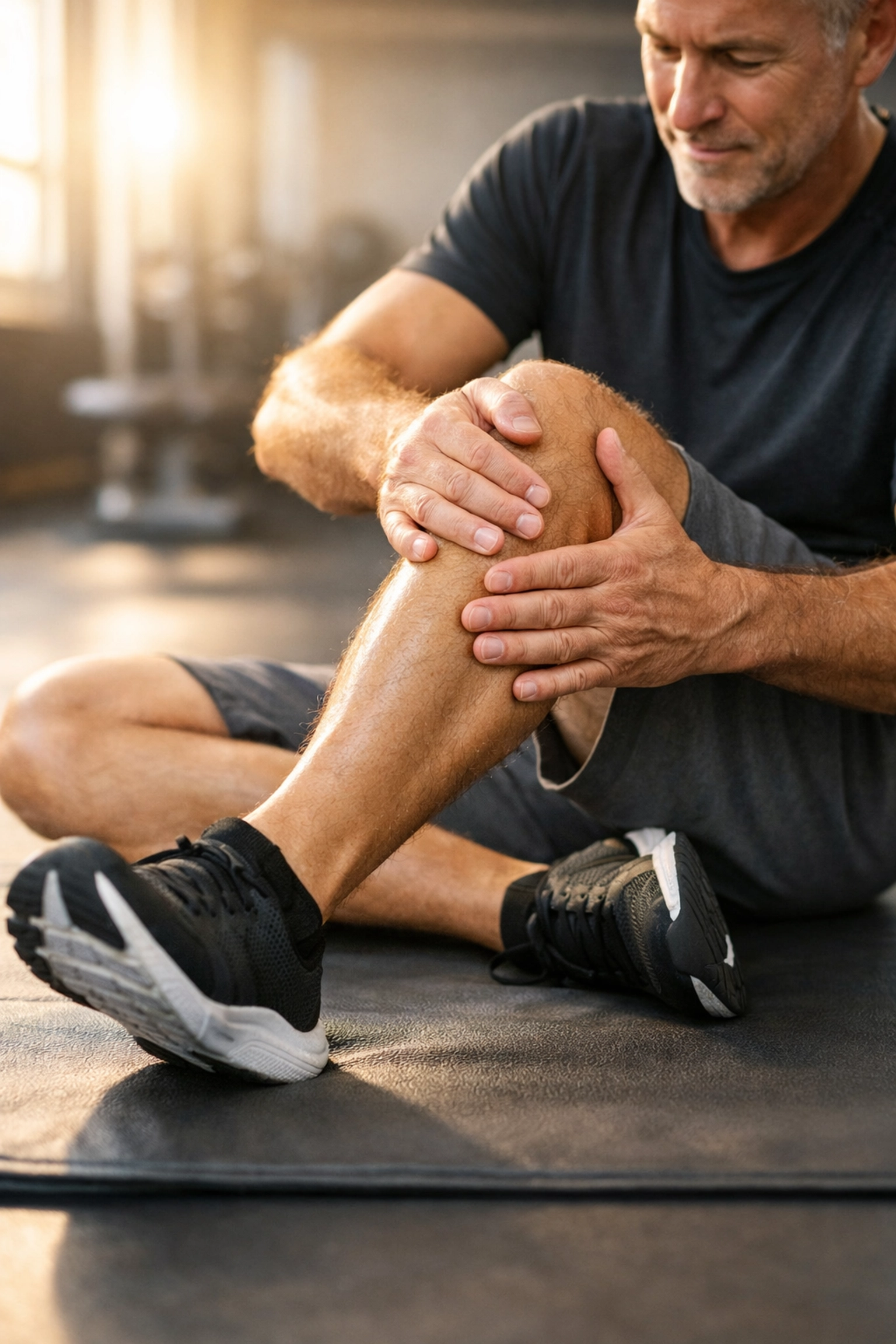
Why "Big Lifts First" Isn't Always Best
For a 20-year-old athlete, the goal is often peak performance at any cost. For us? The goal is longevity. We want to be strong, we want to look great, but mostly, we want to be able to play with the kids, go for a hike, and wake up without needing a handful of ibuprofen.
When you do your biggest movements first, your nervous system is often hit with a massive "shock" before it’s ready. Your brain is trying to coordinate a dozen different muscles to stop you from folding in half under a barbell, while your joints are still screaming, "Wait, I’m not ready yet!"
By the time you’ve finished your "big" lift, you’re often so beat up or "niggly" that the rest of the workout feels like a chore. Or worse, you’ve tweaked something in the first ten minutes and the whole session is a write-off. We’ve seen it happen way too often, and it’s why we take a different approach with our personal training clients here in Bournemouth.
Greasing the Wheels: The Power of Isolated Movements
So, what’s the alternative? It’s called "greasing the groove."
Instead of starting with the heavy stuff, we start with smaller, more isolated movements. Think leg curls, tricep extensions, or face pulls.
"But Penny," I hear you say, "isn't that backwards?"
Maybe in a bodybuilding magazine from 1994, sure. But in the real world? It’s genius. By doing three or four sets of a lighter, isolated movement first, you’re pumping blood directly into the muscles surrounding the joints you’re about to use.
Want to squat? Do some leg curls first. It gets blood into the hamstrings and warms up the knee joint without the massive spinal loading of a barbell. By the time you actually get to the squat rack, your knees feel "cushioned" and supported. You’ve prepared the nervous system, woken up the stabilizing muscles, and: most importantly: you’ve checked in with your body to see how it’s feeling today.
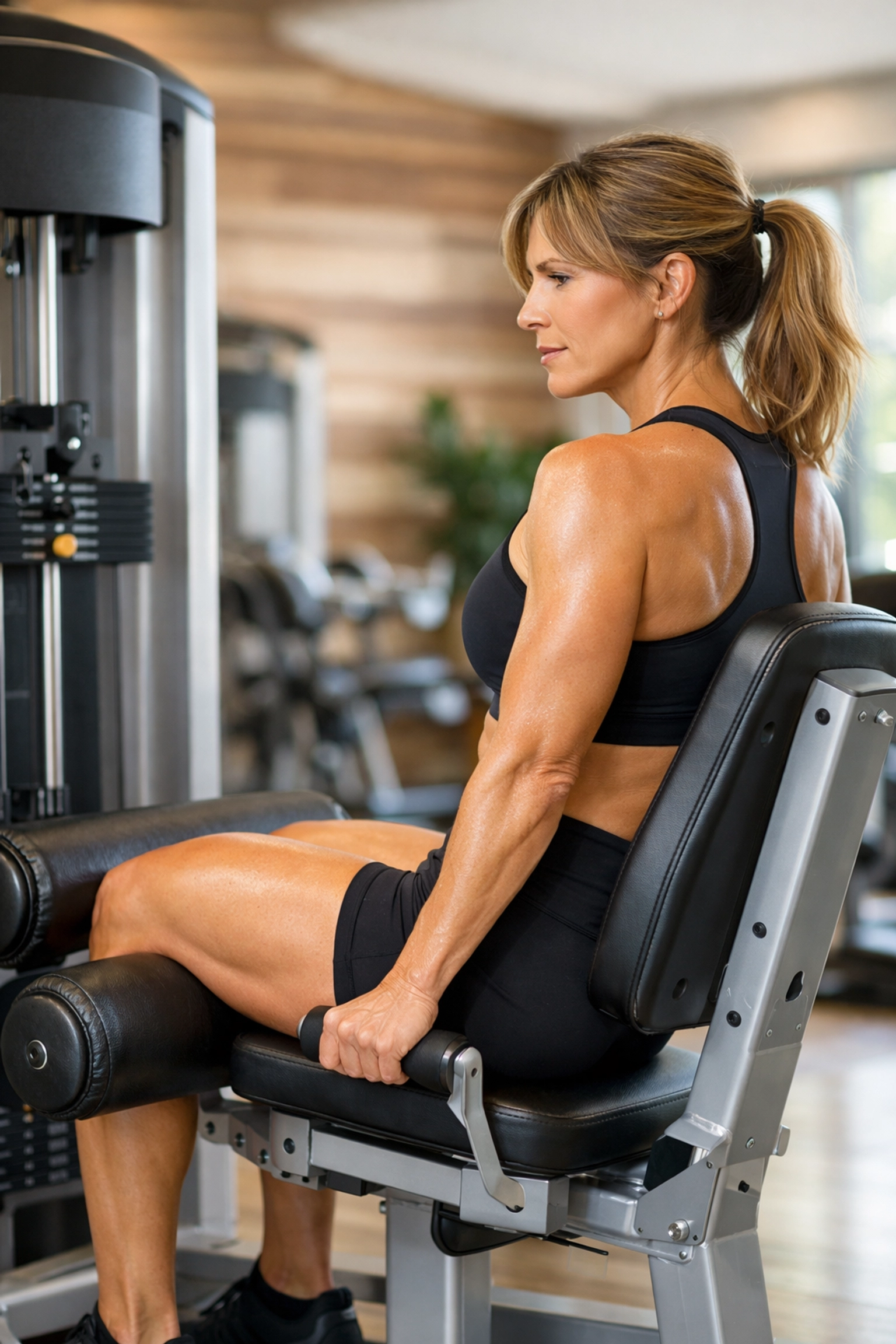
Taming the Niggles (Back, Knees, and Shoulders)
Let’s talk about the "Big Three" trouble spots: the lower back, the knees, and the shoulders. If you’ve been around the block a few times, at least one of these probably bothers you.
The Knees: If your knees feel like they’re crunching through gravel when you squat, doing some high-rep, low-weight isolation work first is a godsend. It builds that "internal heat" that makes the big lifts feel smooth rather than painful.
The Lower Back: This is the big one. Many people fear deadlifts because of their back. But if you spend the first 20 minutes of your session doing core stability work and glute activation, your spine is much better protected when you finally reach for that heavy weight. If you've struggled with this, you might want to check out our thoughts on back pain in Bournemouth.
The Shoulders: The shoulder is the most mobile (and therefore most fragile) joint in the body. Starting with heavy overhead presses is a recipe for a rotator cuff tweak. Starting with some "scapular" work and light rows? That’s how you keep your shoulders healthy into your 70s.
Ego Lifting vs. Longevity Lifting
There’s a mental hurdle here, too. We all like to see big numbers on the bar. And if you save your big lifts for the end of the workout, you might not be able to lift quite as much weight as you would if you were fresh.
And that’s okay.
Actually, it’s more than okay: it’s a feature, not a bug! 🐛
If you’re a bit fatigued when you get to the big lifts, you’re forced to use better technique. You can’t just "muscle" the weight up with brute force and bad form. You have to be intentional. You're getting a massive stimulus for your muscles with less total weight on your joints. That is the definition of "working smarter, not harder."
Does it matter if you squat 80kg instead of 100kg if your muscles feel more worked and your joints feel 100% better the next day? Of course not! We’re training for life, not for a trophy on a mantlepiece. 🏆

20 Years of Figuring This Out
At Bournemouth Personal Training, we’ve spent two decades refining how we train people. We’ve learned that the "no pain, no gain" mantra is mostly rubbish: especially as you get older. True progress comes from consistency, and you can’t be consistent if you’re always injured.
Our approach is built on understanding body mechanics and respecting the fact that a 50-year-old body is a different machine than a 20-year-old one. It's not about doing "easier" workouts; it's about doing better ones. Whether you're doing small group training or one-on-one sessions, the focus is always on making you feel like a powerhouse, not a patient.
How to Try This Yourself
Next time you hit the gym, try this simple flip:
Instead of: Warm up -> Heavy Squats -> Leg Press -> Leg Extensions.
Try this: Warm up -> Leg Extensions (3 sets of 15) -> Leg Curls (3 sets of 15) -> Bodyweight Lunges -> THEN do your Squats.
You’ll be amazed at how much "sturdier" your legs feel. The "Big Lift" at the end becomes the finisher, the grand finale, rather than the thing you’re dreading from the moment you park the car.
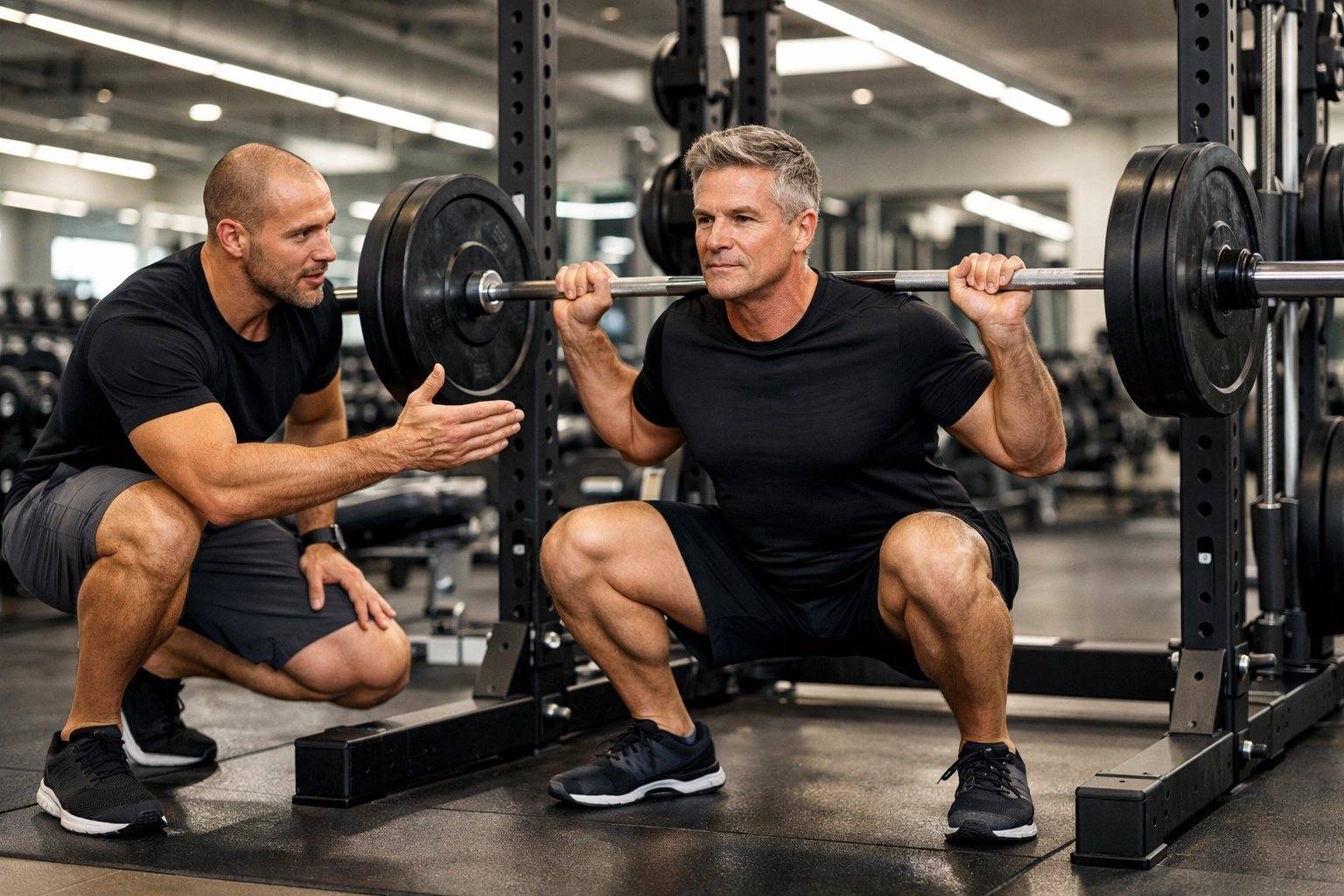
Ready to Feel Awesome?
If you’re tired of feeling like your workouts are a constant battle against your own joints, maybe it’s time for a change in perspective. Training should give you energy, not just take it away. It should make your life outside the gym better, not leave you hobbling around the office on a Monday morning.
If you want to dive deeper into how we structure things, why not take a look at our about us page to see our philosophy in action? Or better yet, if you’re in the Bournemouth area and want a plan tailored specifically to your body and your goals, we’d love to chat.
Life is too short to spend it feeling stiff and sore. Let's get those joints greased, those muscles working, and keep you lifting for decades to come. Boom! 💥
Ready to start? Get in touch with us here and let’s get moving!
Comments